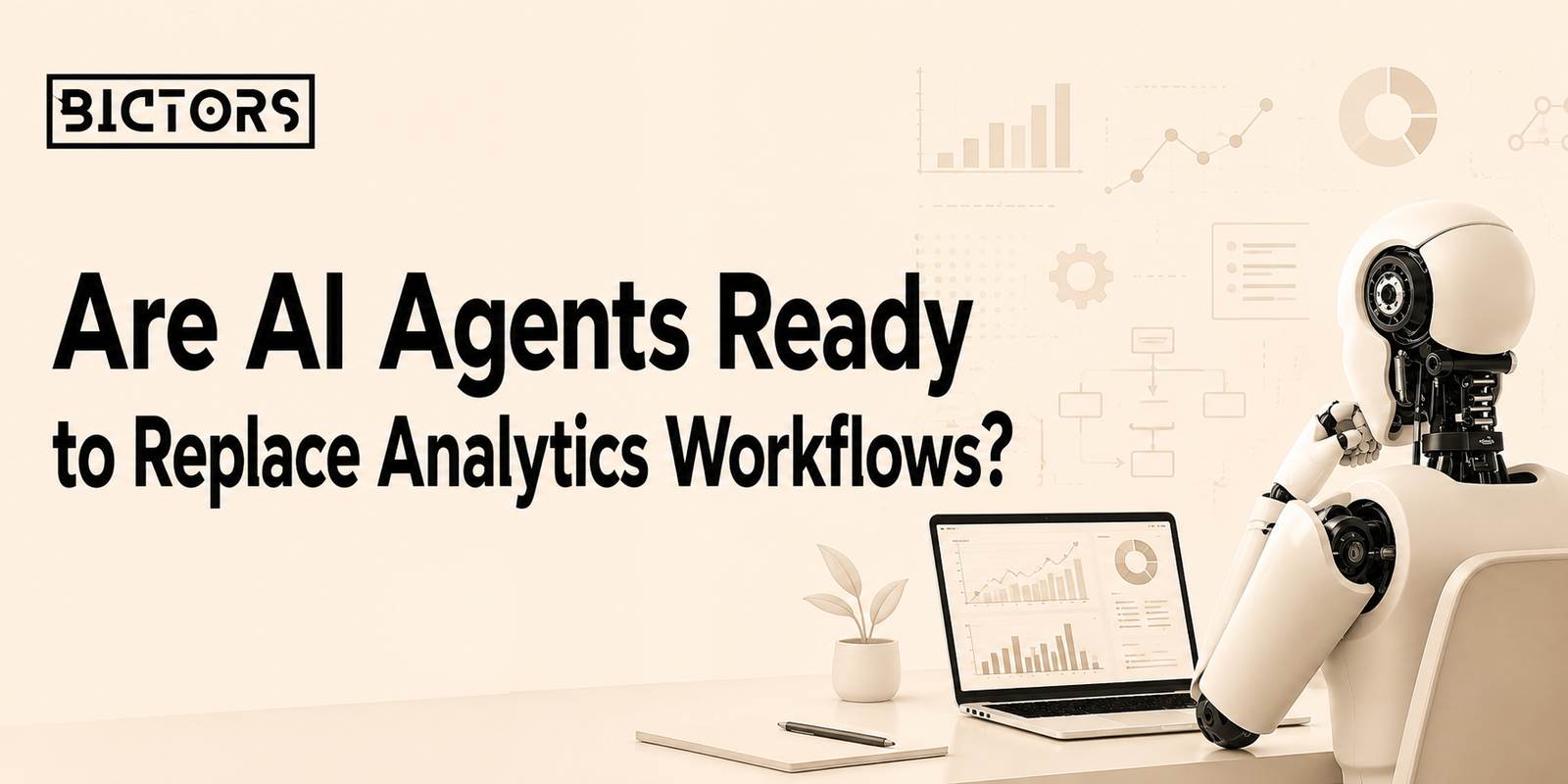
AI agents are not ready to fully take over analytics workflows; they are only ready to take over the repetitive parts of them. Most analysts still spend more hours cleaning data than actually analysing it, and that single fact explains why so many teams got excited when AI agents promised to handle the boring parts of the job.
If you have ever considered signing up for an AI data analytics course, you have probably wondered the same thing everyone in this field is asking right now: can a machine really run the whole analytics show, or is it just really good at the easy parts?
Table of Contents
- What Can AI Agents Actually Automate in a Typical Analytics Workflow Today?
- Where Do AI Agents Still Fail Without Human Review?
- What Does an Analyst’s Role Look Like Once Agents Handle Routine Reporting?
- How Do You Decide Which Tasks To Hand Off to an Agent vs. Keep Manual?
- What Guardrails Should Teams Put in Place Before Trusting Agent Output?
What Can AI Agents Actually Automate in a Typical Analytics Workflow Today?
Data cleaning, query writing, routine reporting, and anomaly alerts are the tasks AI agents handle best right now. These are the repetitive, rule-based jobs that used to eat up an entire afternoon. You type a plain-language request, and within seconds, a chart, a query, or a report shows up on your screen. It feels a bit like having a junior analyst who never sleeps and never complains about writing the same weekly report for the tenth time. This is where AI agents in data analytics have made the biggest visible difference.
Here’s what AI Agents can actually automate today:
- Data Cleaning: Catches missing values, messy formatting, and duplicate entries before they cause problems.
- Query Writing: Turns a plain question into working SQL; no coding skills required on your end.
- Routine Reporting: Produces weekly or monthly reports so that no one has to start off with a blank sheet each time.
- Anomaly Alerts: Notices when a number suddenly jumps or drops and flags it before it slips past you.
Read Next: Are AI-Generated Analytics Reliable? What Data Professionals Must Know
Where Do AI Agents Still Fail Without Human Review?
AI agents still fail when they misread the intent behind a vague question, confidently pulling the wrong data without flagging any doubt. Errors that go unnoticed cause more damage than the ones that trigger an obvious alert. When multiple agents pass data between each other, one small mistake early in the chain can quietly multiply.
Reports reach leadership with numbers that just do not add up, and by then, tracing the error back takes far more effort. This is why more people are signing up for a data analytics certification now, to learn how to catch these errors.
What Does an Analyst’s Role Look Like Once Agents Handle Routine Reporting?
Once agents start handling routine reporting, an analyst’s job stops being about producing the report and starts being about catching what the agent got wrong. Reviewing that output takes real technical skill now; it’s not a lighter task than writing the query. If anything, it takes more attention.
The analysts who push back on an agent’s logic instead of taking its answer at face value are the ones actually adding value. This is how AI agents are changing data analytics jobs. You’re not typing as much, but you’re questioning a lot more.
How Do You Decide Which Tasks To Hand Off to an Agent vs. Keep Manual?
Deciding what to hand off comes down to one simple question: how often does this happen, and how much is riding on it? Automation makes sense for low-risk tasks you repeat often. Strategy, budget, and client relationships are a different story; those still need a person involved.
Here’s how to decide what to hand off to an agent vs what to keep manual:
- Hand-off: Agents take care of repetitive questions, standard formatting, and routine alerts themselves.
- Keep Manual: Anything tied to strategy, budget, or a decision that actually moves the business.
- Review Always: Output going to a client or leadership needs a human check first, no exceptions.
- Test First: Run new workflows alongside human checks for a while before letting them go fully automated.
What Guardrails Should Teams Put in Place Before Trusting Agent Output?
Teams need clear rules for what an agent can touch on its own and what still needs a human sign-off before it goes out. Governance is not so much about restricting AI as it is about defining the boundaries so that trust does not become blind faith. Teams that skip this step often learn the hard way, usually after a client questions a number nobody can explain. Guardrails are not there to slow things down; they are there so nobody gets blindsided later.
Get Started With the Right AI Data Analytics Course
AI agents are not here to replace analysts; they are here to change what analysts spend their time on. If you want to be the person who understands both sides of that shift, the best AI and data analytics course for working professionals will teach you exactly where to trust the machine and where to step in yourself.
Contact Bictors and get started on a course built around where this field is actually heading next. The sooner you understand both sides of this shift, the sooner you become the analyst teams actually want on their bench.
Next up, we break down how prompts are slowly turning into full data pipelines behind the scenes. Don’t miss it.
Frequently Asked Questions
- Is Bictor’s course suitable if I have no prior coding background?
Bictor’s course is structured to build your skills gradually, starting from the basics, so no prior coding experience is needed.
- Will you get placement support after completing the course?
Bictors offers placement assistance to help you apply your new skills in a real job.
- Can you attend classes if you are currently working full-time?
The flexible batch timings are designed to fit around your work schedule, making it manageable alongside a full-time job.