PySpark matters because today’s smart systems run on huge piles of data spread across many machines, and everyday Python tools on a single computer cannot process that much efficiently. Employers look for people who can handle this load, which makes it a strong starting point for automation jobs. A large share of the time in an AI project goes into preparing data rather than building models.
If you are looking at an AI and automation course in Bhubaneswar, we at Bictors teach PySpark step by step, from Python and SQL basics to live projects.
Table of Contents
- What Is PySpark and Where Does It Fit in AI Automation?
- Why PySpark Matters for Large Datasets in AI Automation Pipelines?
- How Does PySpark Work Alongside Airflow and GCP?
- Is PySpark Hard to Learn for Beginners Without a Coding Background?
- Which Job Roles Value PySpark Skills in AI Automation?
What Is PySpark and Where Does It Fit in AI Automation?
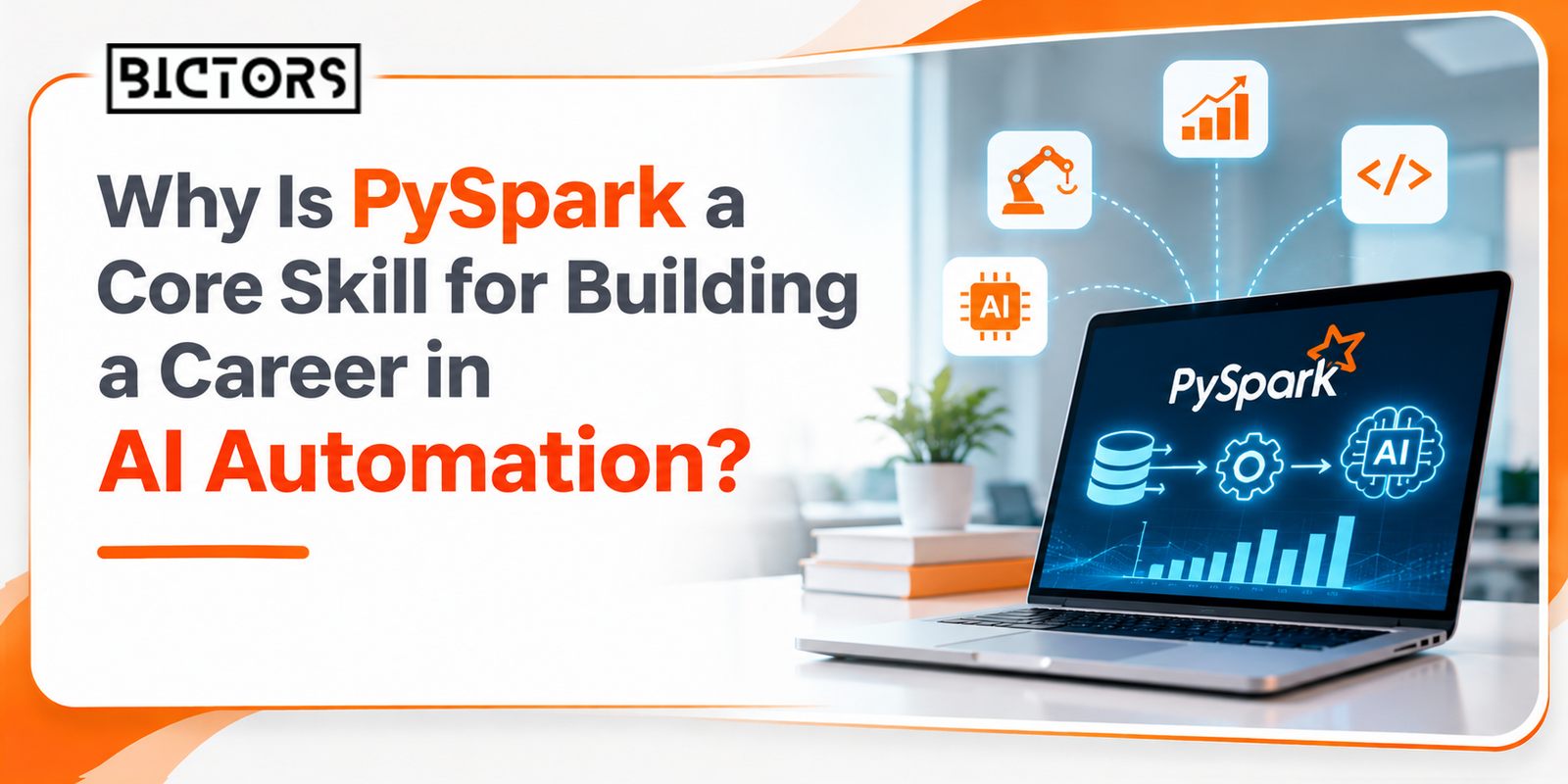
PySpark is a Python-based tool that splits big data jobs across many computers so they finish fast. In automated AI workflows, it usually comes early, getting raw data ready for every decision that follows. At Bictors, we start with data cleaning in our Python data automation module, then move you into PySpark in our cloud data platforms module.
Here is where PySpark sits:
- Raw Data: Arrives from files, apps, and logs.
- PySpark: Cleans, joins, and sorts that data at scale.
- AI Models: Take that ready data and make a decision.
Why PySpark Matters for Large Datasets in AI Automation Pipelines?
Automated data flows often carry more records than one computer can hold in memory. PySpark spreads that work across several machines, so sorting and cleaning finish on time instead of freezing halfway. Small files are easy for everyday tools. Once data grows, they slow down or stop, and a daily morning delivery cannot wait. Big data processing with PySpark keeps jobs fast and reliable as data grows. We at Bictors let you work with growing data, so you see how it behaves in real work.
You May Also Like: What Will Happen to Analytics Engineering as AI Writes Its Queries?
How Does PySpark Work Alongside Airflow and GCP?
Airflow tells each step when to start, GCP provides the cloud storage and computing power, and PySpark takes care of the heavy data work in the middle. Put together, they collect, clean, and deliver data on a schedule without anyone doing it by hand.
Learning PySpark with Airflow and GCP side by side shows you how a pipeline runs from the first step to the last. At Bictors, we teach them together in our course, so you practise the full flow on hands-on projects.
Is PySpark Hard to Learn for Beginners Without a Coding Background?
People from non-tech backgrounds get comfortable with PySpark faster than they expect, as long as they start with basic Python and SQL. Most commands sound like simple instructions, such as pick these rows or total these numbers, so there is nothing scary about them.
What matters most is the order you follow. Start with simple Python, move on to working with data tables, and then step into PySpark. Most people struggle only when they jump ahead. If you are looking for PySpark training in Bhubaneswar, our trainers at Bictors teach in exactly this order, explain every topic in plain words, and clear your doubts as you go.
Which Job Roles Value PySpark Skills in AI Automation?
Roles that build pipelines, train AI models, or create smart apps depend on PySpark the most, since all of them need large amounts of clean data. Those who manage automated workflows also stand out when they can get that data ready without help. Among AI automation career skills, few carry as much weight. We at Bictors teach PySpark in our course, and our instructors guide you through live projects. Here are the roles that rely on it most:
- Data Engineer: Sets up the routes that carry data to AI systems.
- Machine Learning Engineer: Gets big datasets ready for reliable model input.
- AI Developer: Links that data to the apps people use daily.
- Automation Specialist: Keeps scheduled workflows running and fixes them when they stall.
Build Your AI Automation Career With Bictors
PySpark opens doors in AI automation, and the right guidance makes it far easier to learn. With hands-on training in PySpark, Airflow, and GCP, led by practitioner instructors, you can grow into someone who keeps large data flowing without constant supervision. Have questions about batches or your next step? Contact Bictors, and we will walk you through your options. Take that step with us, learn alongside mentors at Bictors, and book your class today.
Keep an eye on our blog for the next read, where we explore how hospitals use data to protect patients earlier.
Frequently Asked Questions
Which skills should you learn alongside PySpark for an AI automation career?
Python, SQL, and a cloud platform pair best with PySpark, and at Bictors, our course covers all of them along with BigQuery and dbt in one learning path.
Which part of the course teaches PySpark?
PySpark sits in the Cloud Data Platforms module, where you learn it alongside GCP, BigQuery, and Airflow, and at Bictors, our practitioner instructors guide you through each step with hands-on work.
How does PySpark experience help you get hired after the course?
It shows employers you can handle large data on your own, and at Bictors, we back that up with live projects, mock interviews, resume building, and placement support until you land a role.