A single hospital ward creates more data in a day than a care team can read in a week. Readings, test results, notes, and summaries keep coming. Much of it sits untouched until a problem has already started. AI data analytics changes that by checking the information as it arrives and flagging patients who may need help soon. If you are looking at an AI data analytics course in Bengaluru, this blog explains how that works inside a hospital. We at Bictors teach this kind of work, so the topics here are the same ones our learners practise.
Table of Contents
- What Does Predicting Patient Risk Mean in Hospital Data Analysis?
- Which Patient Data Do AI Models Use to Predict Risk?
- How Do Hospitals Use Risk Predictions to Act Before a Patient’s Condition Worsens?
- What Challenges Do Hospitals Face When Using AI for Patient Risk Prediction?
- Which Skills Do Analysts Need to Work on Patient Risk Prediction?
What Does Predicting Patient Risk Mean in Hospital Data Analysis?
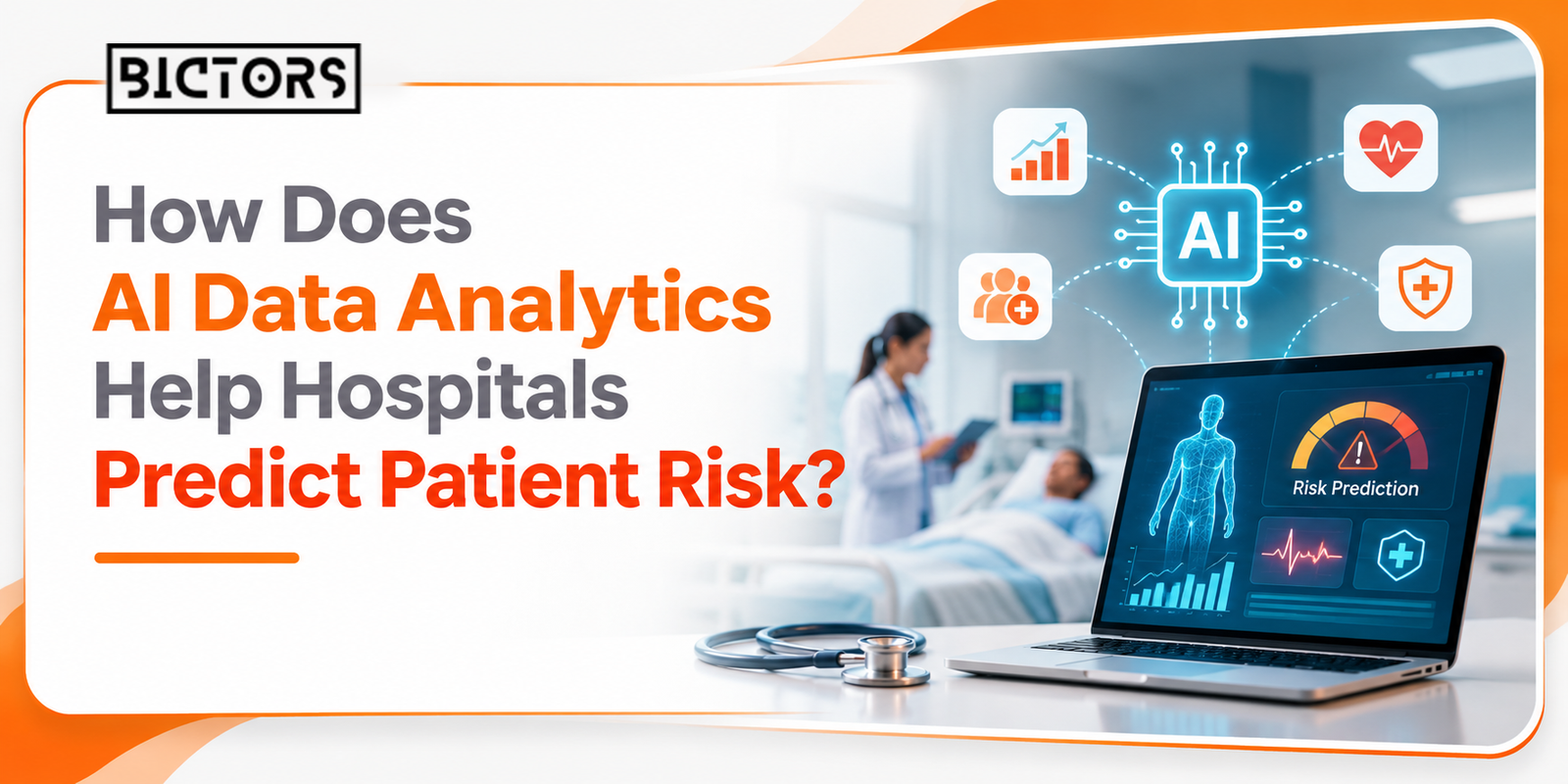
Doctors and nurses use a person’s medical history and current readings to work out who in the ward is most likely to take a turn for the worse. Some may need to return soon after going home, and some may develop a complication. The result is only a likelihood, so the care team still makes the call. This is what healthcare data analytics is built around, since stored records become warnings that arrive in time to help. We cover the basics of this at Bictors, so even beginners can follow how a forecast comes together.
Which Patient Data Do AI Models Use to Predict Risk?
Hospital forecasting tools draw on the information a care team already keeps about each patient, along with a few extra sources that fill in the background. Our AI data analytics course at Bictors lets you work with data like this directly. You learn how each type is read, cleaned, and used in a forecast. This is what patient risk-prediction models usually look at:
- Health Records: Past illnesses, medications used and previous treatment.
- Lab Results and Vital Signs: Blood tests, heart rate, oxygen, and blood pressure.
- Doctor and Nurse Notes: Written comments that a trained model can scan for useful clues.
- Medical Images: Scans and X-rays that can show small changes the eye may miss.
- Daily Life Details: Home situation or activity tracked by a wearable device.
Read Next: No Coding Background? You Can Still Build a Career in AI Data Analytics
How Do Hospitals Use Risk Predictions to Act Before a Patient’s Condition Worsens?
Hospitals use risk predictions as early alerts, so doctors and nurses can step in with an extra check, another test, or closer monitoring before things get serious. With predictive analytics in hospitals, teams can also call patients who may return soon and plan beds and staff ahead of busy periods. At Bictors, we teach the same early-warning thinking through live projects like Customer Behaviour and Churn Analytics.
What Challenges Do Hospitals Face When Using AI for Patient Risk Prediction?
Hospitals have to work with records that are half-filled, kept in different places, and locked behind privacy rules. Many doctors will not trust an alert that comes with no reason. Machine learning for healthcare analytics needs regular testing for this reason, since a model built on one group of patients can give wrong results for another. At Bictors, we prepare you for these problems in our AI data analytics course. Our instructors give you real-world datasets to clean and check through hands-on projects, then show you how to explain what you found in simple words.
Which Skills Do Analysts Need to Work on Patient Risk Prediction?
Hospital forecasting work needs someone who can sort out messy data, run the numbers, and know how a care team works. Doctors are busy, so the findings also have to be explained simply. We teach all of this at Bictors, and we start our AI data analytics course from the basics. It’s not just listening; you get to practice with real-world datasets and hands-on projects. Here’s what we help you focus on:
- SQL and Python: The tools used to pull out and work with big tables of data.
- Data Cleaning: Patient records often come with blanks, repeated entries, and typing errors that need sorting out first.
- Statistics and Modelling: how a model arrives at a score and how far you can trust it.
- Data Visualisation: dashboards that a doctor can understand in a few seconds.
- Healthcare Basics: common medical terms, how hospital teams work, and privacy rules.
Build In-Demand AI Data Analytics Skills With Bictors
Reading data and spotting risk early is a skill that hospitals and many other industries look for. Contact Bictors to book your seat and begin your AI data analytics journey with trainers who support you through each topic.
Our next blog covers the common slip-ups newcomers make when they start their first cloud data engineering projects, so keep an eye out for it.
Frequently Asked Questions
Which skills from a data analytics course help with patient risk prediction?
SQL for pulling patient records, Python for cleaning data, and Power BI for dashboards are the skills you carry into patient risk prediction work. We at Bictors teach all three through live business projects, with mentors guiding you at each step.
Do you need coding experience to start learning data analytics?
You do not need coding experience to start learning data analytics, and graduates from any stream can join. We at Bictors cover the groundwork in our first lessons before moving to harder topics.
Which projects help you practise skills used in patient risk prediction?
Live projects such as Customer Behaviour and Churn Analytics and the Supply Chain Analytics Platform give you hands-on practice with business data. We at Bictors guide you as you move beyond historical dashboards into predictive modelling and pattern recognition.