Analytics engineers aren’t being replaced; they’re being redefined. AI now writes a large share of routine SQL queries, and that share keeps climbing every quarter. Yet talk to anyone actually working in data teams, and the story doesn’t match the panic. The old skill set won’t cut it anymore, which is exactly what’s driving interest in an AI-powered analytics engineering course.
Table of Contents
- How Is AI Now Generating SQL, Dashboards, and Reports Without Human Input?
- Where AI-Generated Queries Go Wrong and Why No One Catches It in Time?
- What Is the Growing Risk of Silent Errors in Automated Analytics Pipelines?
- What AI Governance Means for Analytics Engineers in 2026?
- Why Is Human Oversight Now a Core Technical Skill?
How Is AI Now Generating SQL, Dashboards, and Reports Without Human Input?
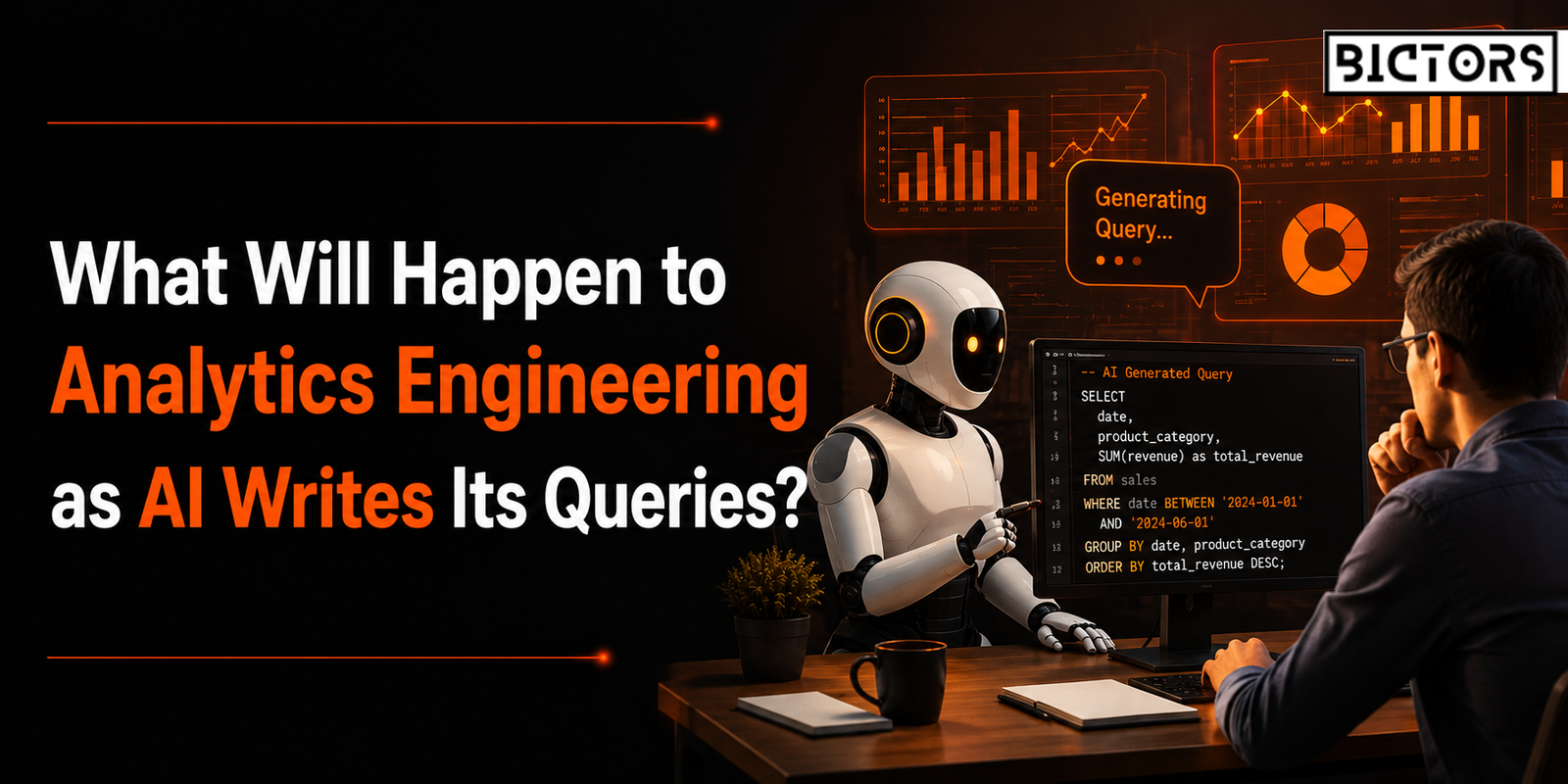
AI tools can write SQL queries, build dashboards, and put together full reports on their own, often in seconds. A single prompt now produces results that once took an engineer hours to build by hand.
That speed is genuinely impressive, but it comes with a catch. These tools don’t always know when they’ve gotten something wrong, and that’s exactly where things start to get risky.
Where AI-Generated Queries Go Wrong and Why No One Catches It in Time?
AI-generated queries go wrong when the model misreads business context, joins the wrong tables, or applies outdated logic. The mistake slips by unnoticed because the output still looks polished and confident, even when it’s completely off.
That’s the real risk. A dashboard can run clean, look accurate, and still be feeding decisions off a quietly broken filter or a misunderstood join, and nothing about the output gives that away.
What Is the Growing Risk of Silent Errors in Automated Analytics Pipelines?
A silent error doesn’t announce itself. It just sits there, buried in a report, doing damage for weeks before anyone notices. Automated pipelines make this worse because they never stop to check their own work; they just keep running.
Here’s why these errors slip by so easily:
- Looks Right, Isn’t Right: The dashboard can be totally wrong, and you’d never guess it from looking at it.
- No One Stops To Ask: There’s no moment where a person glances at the number and goes “wait, that seems off.”
- One Error Becomes Many: That one mistake doesn’t stay put. It shows up in every report downstream, too.
- Too Much Trust, Not Enough Checking: People just believe the number because a machine generated it.
Programs offering AI and SQL training for data professionals exist to close exactly this gap, training people to catch what AI quietly gets wrong.
Wondering if AI-generated numbers hold up once you scale them? Read this blog: Are AI-Generated Analytics Reliable? What Data Professionals Must Know
What AI Governance Means for Analytics Engineers in 2026?
AI governance involves establishing well-defined limits on the scope of AI’s access, the outputs AI can generate, and the validation process of those outputs before being introduced to decision-makers. For analytics engineers, this has quietly become one of the biggest parts of the job.
It’s no longer just a compliance box to tick. Engineers pursuing an AI analytics engineering certification are learning to build guardrails as much as pipelines. They’re the ones deciding what AI gets to touch on its own, and what still needs a human to sign off first.
Why Is Human Oversight Now a Core Technical Skill?
Human oversight used to be optional. Now it’s a requirement because someone still has to verify what AI actually produces. It sits right alongside coding and system design as a core part of the job.
Skills that define this new breed of the role:
- Logic Review: Catching bad AI-generated logic before it ever goes into production.
- Data Lineage Tracking: Knowing your data so well that you know when it does not add up.
- Judgment Calls: Recognising when to trust the automation and when to slow things down.
- Stakeholder Communication: Explaining risk in plain terms to people who aren’t technical.
For anyone looking to learn AI-powered data analytics skills or explore analytics engineer upskilling for AI, the real differentiator now is oversight, not just output.
Want to Be the Engineer AI Can’t Replace?
AI will keep writing more of its own queries, but that doesn’t mean analytics engineering is going anywhere. It just needs sharper, more accountable people running the show. If you want to get ahead of where this role is headed, Bictors’ online course for AI-driven analytics engineering is a good place to start. Contact us to learn more and save your spot.
There’s more to unpack, especially around how much AI output can really be trusted. Keep an eye out for the next blog.
Frequently Asked Questions
- Is analytics engineering a good career choice in the AI era?
The role’s definitely changing, but it’s evolving instead of disappearing, so it’s still worth going for.
- Do analytics engineers need to know how to code if AI writes queries?
Coding still matters a lot because you need it to catch and fix whatever AI messes up.
- How often should AI-generated reports be reviewed?
Fairly often, especially when the report is being used to make big business decisions.