
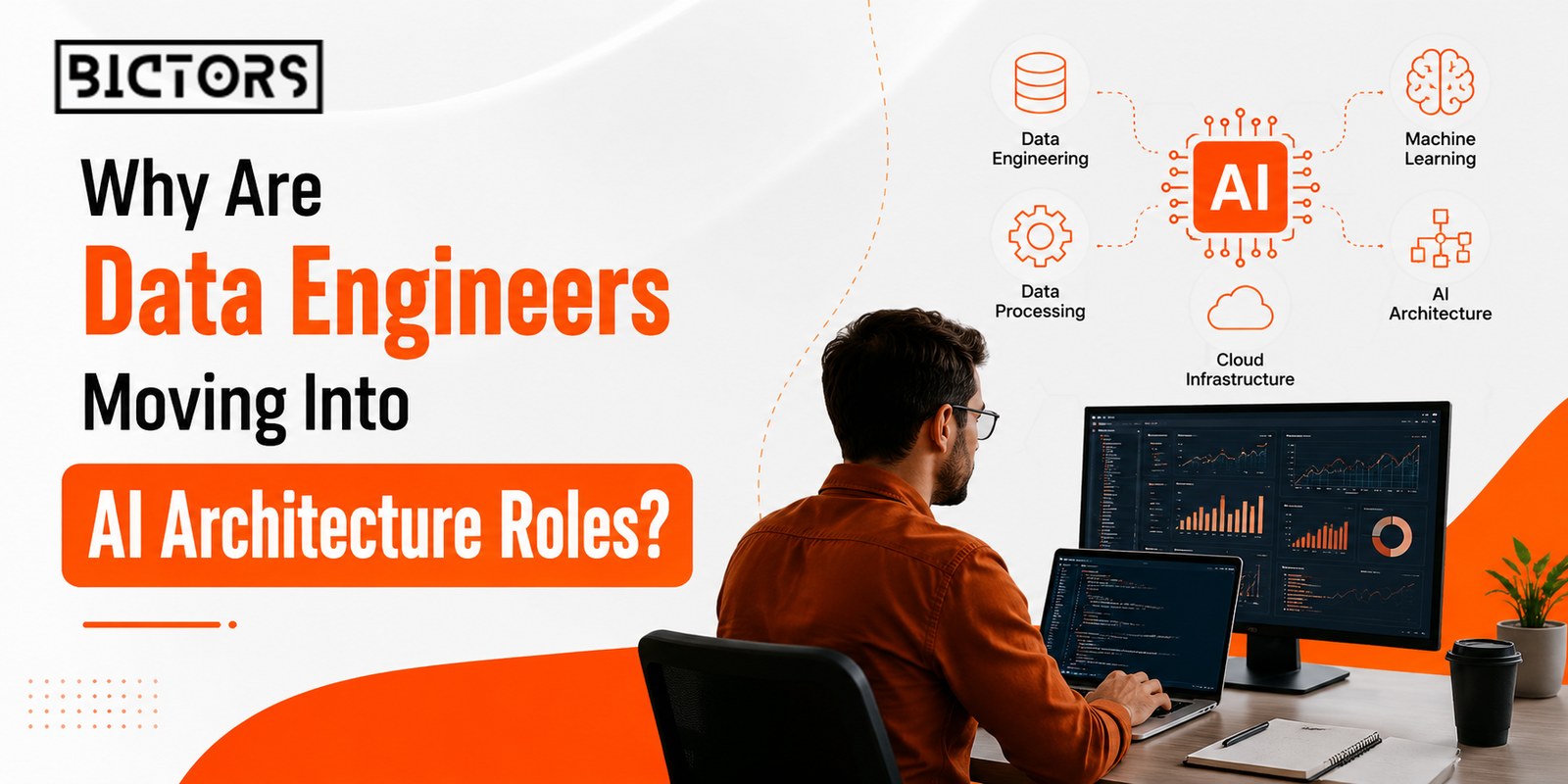
Data engineers are moving into AI architecture roles because they already have the exact skills AI companies need right now. It may sound surprising at first, but it makes sense once you break it down. A few years ago, “data engineer” simply meant someone who builds pipelines and keeps data flowing behind the scenes. Now titles like “AI Systems Architect” show up on job boards everywhere, and many people in those roles used to hold that older title.
That is exactly why interest in a data engineering course keeps growing, since it builds the foundation these new roles actually demand.
Table of Contents
- What Is an AI Architect and How Is It Different From a Data Engineer?
- Why Is the Line Between Data Infrastructure and AI Infrastructure Blurring?
- What Skills Do Data Engineers Already Have That Transfer Into AI Architecture?
- Why Are Companies Promoting Data Engineers Into AI Design Positions?
- What is The Career Progression From Data Engineer to AI Systems Designer?
What Is an AI Architect and How Is It Different From a Data Engineer?
An AI architect designs how an entire AI system connects and functions. A data engineer focuses on cleaning, storing, and preparing the data that the system depends on. The two roles sit close together, but they solve different problems. A data engineer builds the pipes through which the data flows. An AI architect decides how every part of the AI system works together once that data arrives.
Why Is the Line Between Data Infrastructure and AI Infrastructure Blurring?
Data infrastructure and AI infrastructure are blurring because AI models now need the same pipelines, storage systems, and monitoring tools that data teams already built. A model is only as reliable as the data feeding it, so the systems behind both jobs have begun to overlap until they are nearly the same.
This overlap is not something you can ignore if you plan to build a long career in this space. The cloud platforms running these pipelines are the same ones now running AI workloads, which raises a fair question. Is a GCP Data Engineering Course Worth It in 2026? Read on to find out.
What Skills Do Data Engineers Already Have That Transfer Into AI Architecture?
Data engineers already carry most of the technical foundation AI architecture demands, from pipeline design to system scaling. Their daily work has quietly been AI prep work all along.
Skills that carry over naturally:
- Pipeline Building: Years of moving raw data through different stages without breaking anything is basically the same skill machine learning models need to get fed properly.
- System Scaling: Anyone who has watched data volumes grow and had to keep systems running already knows what scaling an AI workload feels like.
- Data Quality Checks: Catching a bad record before it ruins a report works the same way as catching one before it ruins an AI output.
- Cloud Platform Experience: Engineers who feel at home in cloud environments do not need to relearn much when that comfort is pointed toward AI infrastructure instead.
Why Are Companies Promoting Data Engineers Into AI Design Positions?
Companies promote data engineers into AI design roles because these engineers already understand the systems AI depends on. That familiarity cuts down training time and lowers risk for the company. Hiring someone brand new means starting from scratch, and promoting from within skips that step entirely, since the person already knows where the data lives and how it tends to misbehave.
What hiring managers value most:
- Faster Ramp-Up: There is no need to walk a new hire through years of existing systems when the person has already built them.
- Trust Built Over Time: An engineer who kept things running through past outages earns a level of trust that is hard to hand to someone new.
- Lower Cost: Promoting someone already on payroll almost always costs less than a lengthy external search.
- Fewer Early Mistakes: Someone who already understands the setup is far less likely to break something important in their first few months.
Recruiters chasing current AI hiring trends are not splitting their search into two separate pools anymore. They want people who bring machine learning infrastructure knowledge and solid data skills at the same time.
What is The Career Progression From Data Engineer to AI Systems Designer?
Most engineers start by building basic pipelines, move on to managing more complex data systems, and eventually land in roles where they design full AI systems from the ground up. Along the way, most pick up AI-adjacent projects on the side, get pulled into model deployment work, and slowly turn into the person their team leans on for architecture decisions.
Make Your Move Into AI Data Engineering Now
Companies are not slowing down their AI push, and they need people who can move between data pipelines and full system design without missing a beat. If you already work with data, or you are looking for a way in, the right training program is the starting point that gets you there. Reach out to Bictors today and take the first step toward that path.
Wondering if your current pipelines could even survive the next wave of AI tools? That question deserves its own answer, and it is coming up next.
Frequently Asked Questions
- Does every data engineer need to learn AI architecture to stay relevant?
Most roles are shifting toward some AI exposure, though the pace and depth needed depend on the company and industry.
- Is coding experience enough to move into an AI architecture role?
Coding is only part of it, since system design and data judgment matter just as much as writing code.
- How long does the shift from data engineer to AI architect usually take?
It varies widely, often taking a year or more of hands-on exposure before the responsibilities fully shift.